
Charlotte's red clay barely drains, so heavy storms leave water pooling in your yard and running toward your foundation. We install french drains and drainage systems that carry it away from your home and keep it from coming back.
Get a Free Quote
Thank You!
We'll get back to you shortly. For immediate help, call (980) 540-1646.
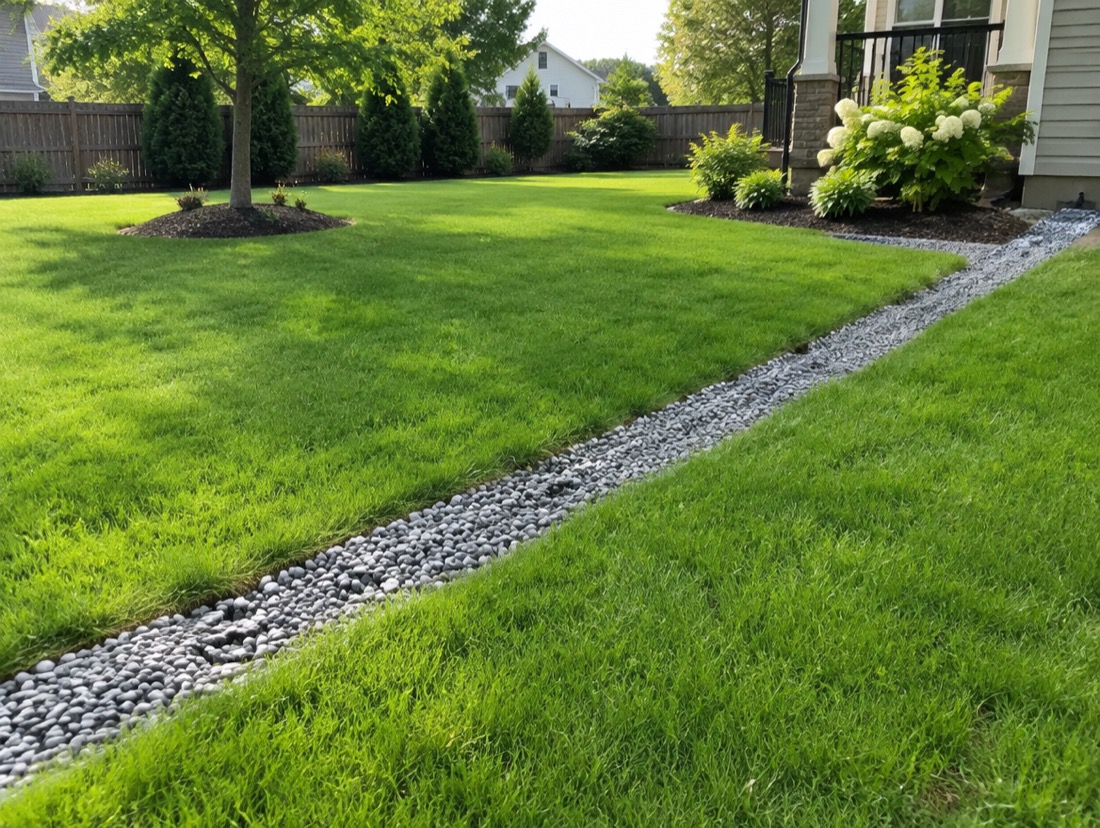
Charlotte French Drain installs french drains and full yard-drainage systems for homeowners across the Charlotte metro. When water pools in the yard, by the patio, or against the foundation, we trace where it is going and build a path to carry it away. Our services cover french drain installation, catch basins, downspout drainage, trench drains, and dry wells. One crew solves the whole drainage picture, not just one wet spot.
Most Charlotte drainage problems start underground. The Piedmont's dense red clay holds water instead of letting it soak in. Many lots were also graded flat by builders, so runoff has nowhere to go but toward the house. A hard summer storm can drop inches in an hour onto ground that cannot absorb it. We install every drain at the right depth and slope, then wrap the pipe in filter fabric so the clay cannot clog it. We fix the cause, not just the wet spot. Every project starts with a free on-site drainage evaluation.
Not sure a french drain is what your yard needs? These are the signs we see most on Charlotte properties.
Puddles sit in the yard for hours, sometimes days, after the rain stops. If the water has no low point to escape to, it just waits there until it slowly evaporates.
Runoff collects along the foundation, the patio, or the crawl-space vents. Water sitting against the house is exactly the problem a french drain is built to redirect.
Whole sections of the yard stay squishy underfoot, and moss or algae take over the wet, shaded spots. That is saturated clay that cannot drain on its own.
Your gutters dump a river at one corner of the house, or water runs downhill from a higher lot next door. A french drain or downspout line carries it off before it pools.
Every system we install does one job: move water off your property and away from your home. Here's what we build across Charlotte.
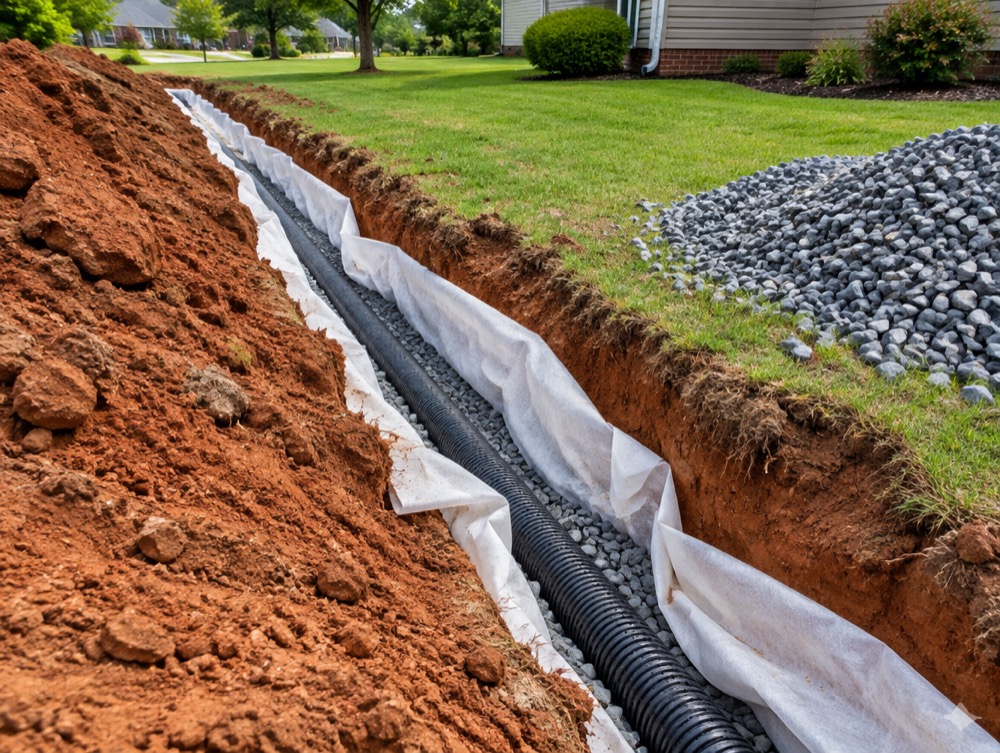
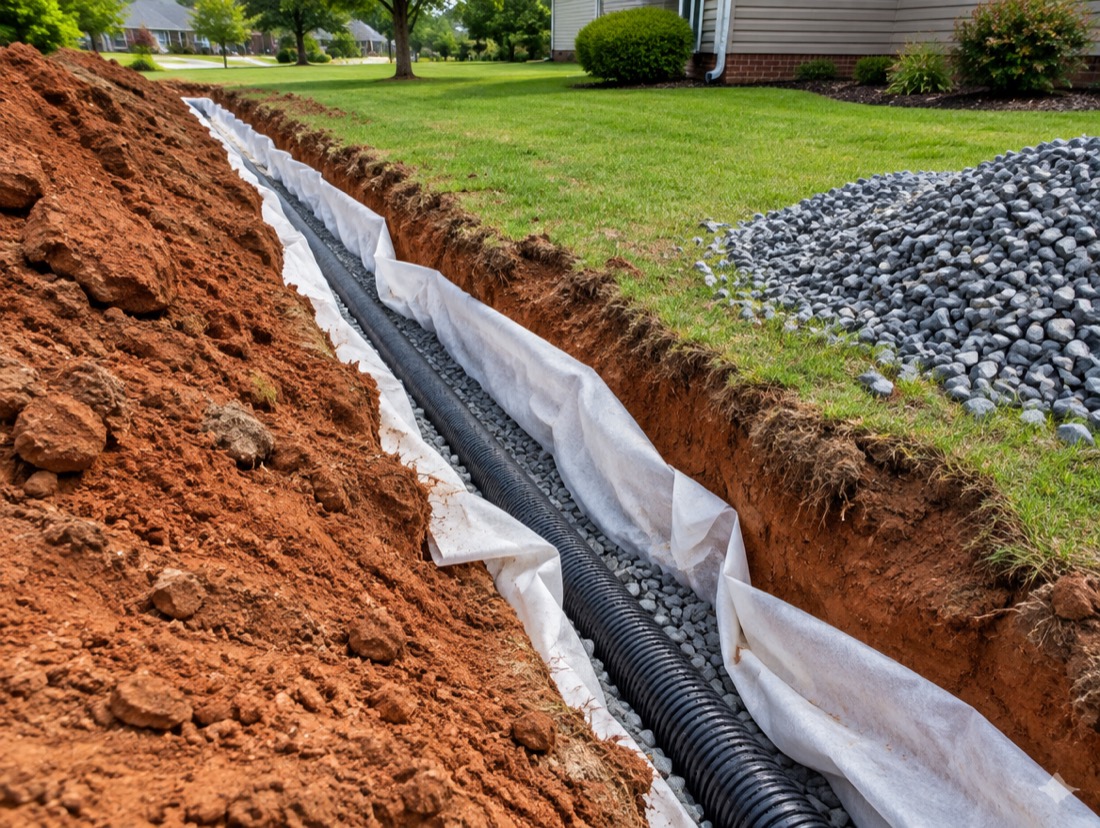
A french drain is the backbone of almost every drainage fix we do in Charlotte, and for most yards it is the one system that actually solves the problem instead of hiding it. It is a gravel-filled trench with a perforated pipe running through it, buried along the path water naturally wants to travel. Groundwater and surface runoff seep into the gravel, drop into the pipe, and get carried off to a safe outlet instead of sitting on your lawn.
The details are what make it last, and they are exactly what most companies skip. We dig to the right depth, hold a steady slope of about an inch every eight to ten feet so gravity keeps the water moving, bed the pipe in washed stone, and wrap the whole thing in filter fabric. That fabric is the part that matters most here: it keeps Charlotte's fine red clay and silt from washing into the pipe and clogging it, which is the number-one reason cheap french drains fail within a few years.
Where the water goes next depends on your lot. We can daylight the line at a lower spot on the property, run it into a catch basin or dry well, or finish it with a pop-up emitter. Either way we plan the outlet first, because a drain with nowhere to send its water is just a buried puddle.
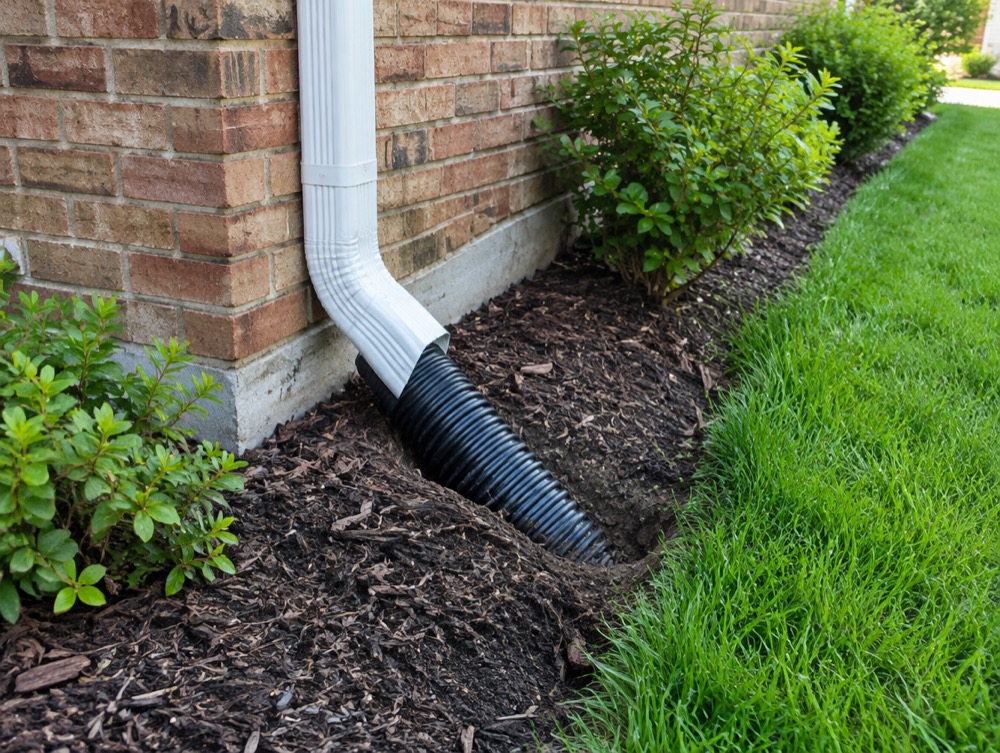
Your gutters do a great job pulling water off the roof, and then most of them drop all of it in a splash block right next to the foundation. In a single Charlotte storm a roof can shed hundreds of gallons, and releasing that much water a foot from the house is how it ends up in crawl spaces and against footings.
We disconnect the downspouts from the foundation and tie them into solid, buried pipe that carries the water well out into the yard, to a lower spot, a catch basin, or a dry well. Because the pipe is sealed rather than perforated, it moves roof water fast and does not let it seep back out along the way.
It is one of the cheapest, highest-impact fixes on a property, and we often pair it with a french drain so roof water and ground water are both handled in the same visit.
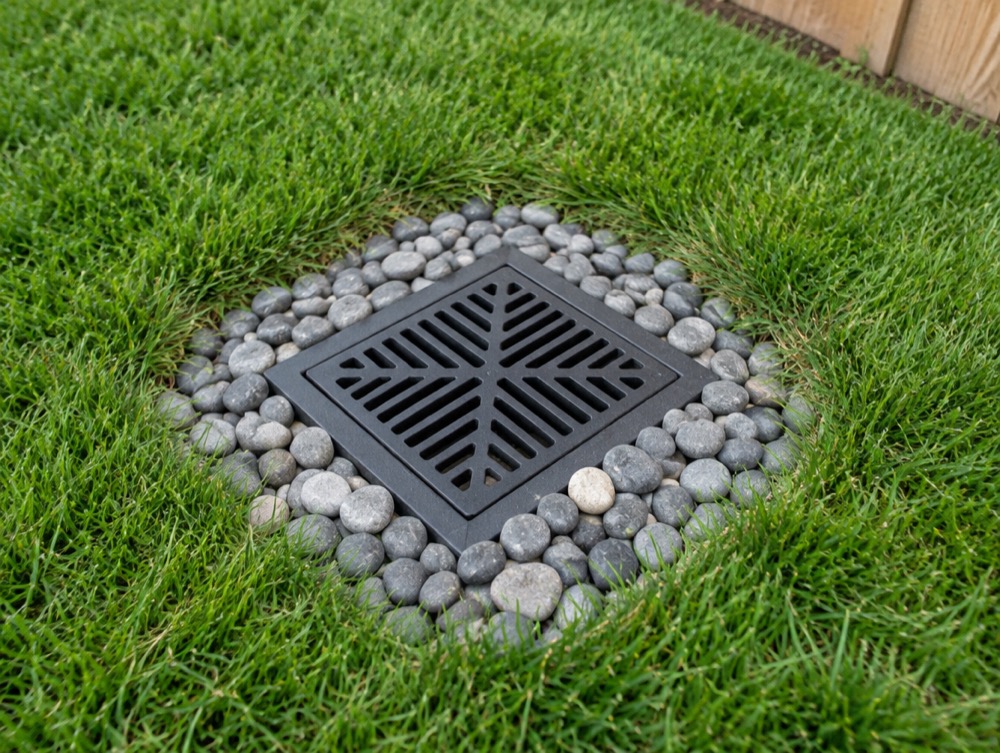
A catch basin is a grated box set flush into a low spot where water already collects. Surface runoff pours through the grate, drops into the box, and feeds into your buried drain line, so the puddle that used to sit there finally has somewhere to go.
They work best where water sheets across the surface faster than the clay can absorb it: the bottom of a slope, a soggy corner of the lawn, or the base of a driveway. We size the basin and the outlet pipe to the amount of water the area actually sees, and set it at the true low point so nothing pools around it.
On larger lots we will tie several basins into one main line, catching water at each trouble spot and carrying it to a single safe outlet.
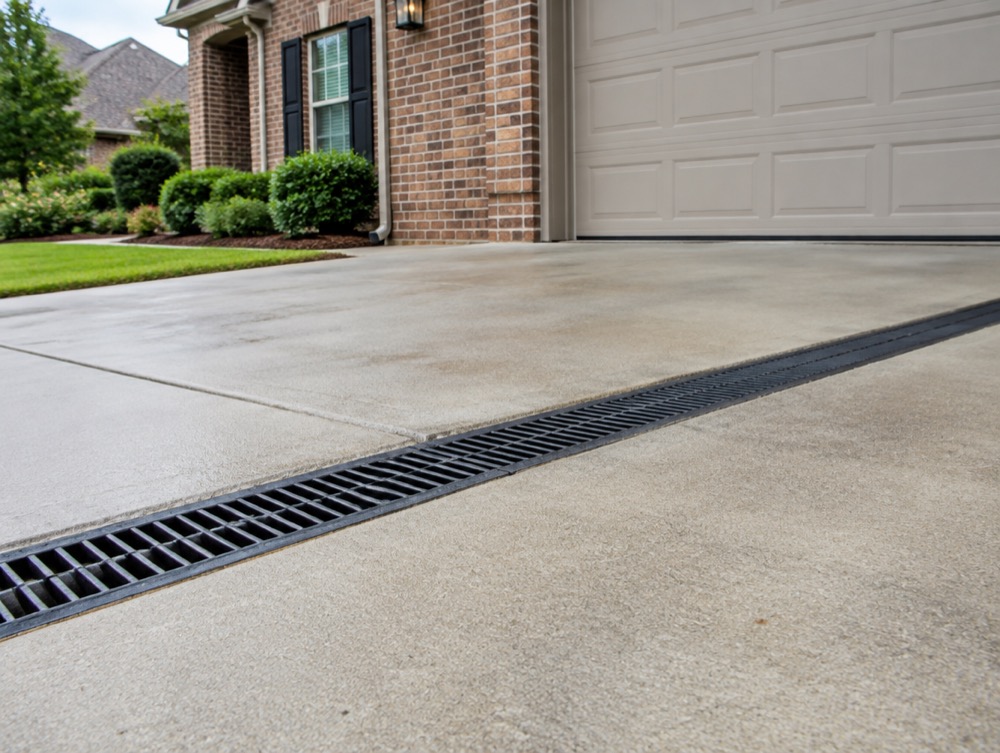
A trench drain, also called a channel drain, is a long, narrow grate set into the surface to catch water as it sheets across hard pavement. You see them across driveways, garage aprons, pool decks, and patios, anywhere a wide run of concrete pushes water toward a door or a low area.
They are the answer when water is running into your garage, pooling at the bottom of a sloped driveway, or crossing a walkway every time it rains. We cut the channel into the concrete, set the drain flush so it does not catch tires or feet, and connect it to the line that carries the water underground and away.
Unlike a single catch basin, a trench drain captures water along its entire length, so it is the right tool when runoff arrives as a wide sheet instead of collecting in one spot.
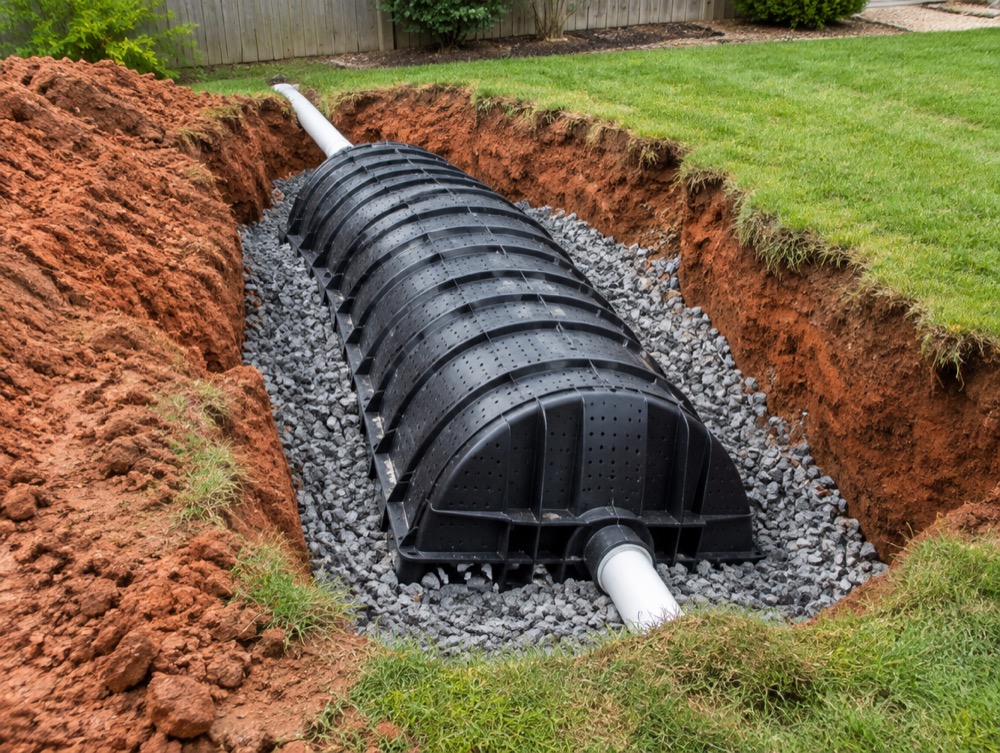
A dry well is a buried basin, either filled with stone or built as a hollow chamber, that takes a surge of water and holds it while it soaks slowly back into the ground. It is the outlet we reach for when a yard has no natural low point to daylight a drain and no street or ditch it can legally tie into.
A french drain, a downspout line, or a catch basin feeds the dry well, which buffers the flood from a heavy storm and lets it out gradually instead of washing out a bed or sending water onto a neighbor. We size it to your roof area and how fast your soil drains, which matters in Charlotte because dense clay takes on water slowly.
Placed and sized correctly, a dry well lets a full drainage system work even on a flat, enclosed lot where water would otherwise have nowhere to escape.
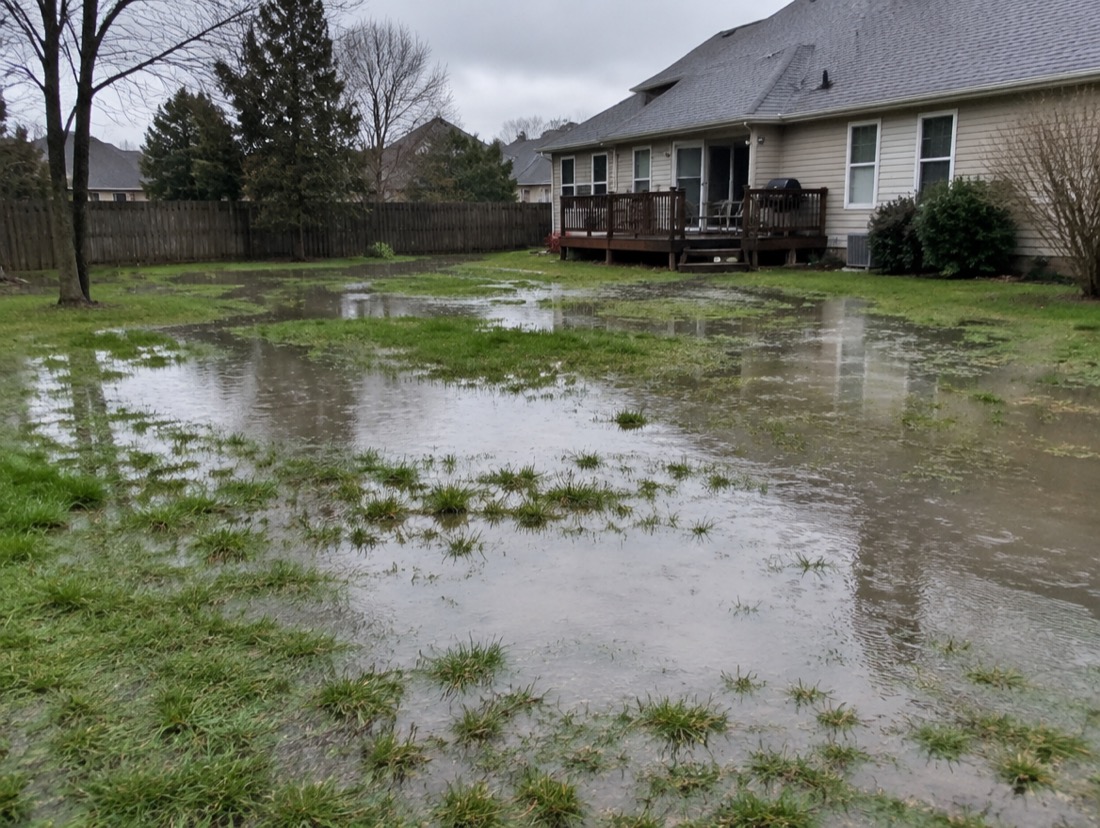
Standing water is almost never really about the rain. It is about what the rain lands on, and in Charlotte that is some of the most stubborn ground in the country for drainage. Between the red clay, the way local lots are built, and the storms that roll through every summer, water that should soak away or run off instead collects and sits. Here is what is actually working against your yard.
Most of the Charlotte area sits on Piedmont red clay, and clay is about the worst soil there is for drainage. Its particles are so fine and packed so tightly that there is almost no open space between them for water to pass through. It turns sticky and swollen when it is wet, then bakes rock-hard when it dries, so instead of soaking in, rain just sits on top or runs off. That is why a yard here can flood after a storm a sandy lot two states over would shrug off.
Dig down in a lot of Charlotte yards and you hit what old-timers call bull tallow: a dense, slick layer of weathered clay subsoil with almost no life or structure to it. It is even less permeable than the topsoil above it, so even when the surface finally takes on a little water, that water reaches the bull tallow and stops. Builders often strip the good topsoil during construction and leave this layer close to the surface, which is why so many newer yards drain worse than the woods they replaced.
The Charlotte region is rolling Piedmont, not flat, so builders cut and fill the hills into level pads to put houses on. That grading rarely leaves water a clean path off the lot, and the shallow swales meant to carry it away tend to silt up, settle, or get planted over within a few years. The result is a yard where one corner sits lower than it should, or where your ground sits downhill from the neighbor's, so their runoff becomes your problem.
On top of all that, Charlotte gets hit with intense summer thunderstorms and the leftovers of tropical systems that can drop an inch or more of rain in a single hour. Clay cannot absorb water anywhere near that fast, so the overflow sheets straight across the surface to the lowest point it can find, which is often a patio, a walkout, or the foundation. A yard that looks fine most of the year can turn into a pond in twenty minutes.
None of this is something you can fix by regrading one spot or waiting for the ground to dry out, because the clay underneath is not going to change. The answer is to give the water a built path off your property. That is exactly what a french drain and the right outlet do, and it is why we start every job by finding where your water comes from and where it needs to go.
Digging a trench is the easy part. Making the water actually leave, and keep leaving for years, comes down to the steps before and after the shovel. Here is how we do it.
Every job starts with a free on-site visit, not a quote over the phone. We walk the property, ideally during or right after a wet spell, and track where water pools, where it comes in, and where it needs to go. We check your slope, your soil, and your downspouts. Most failed drains fail because nobody did this first.
Before we dig, we plan the full path: where the drain runs, how deep, and what slope it needs. North Carolina rules mean we cannot send the water onto a neighbor's lot or into the street, so we settle the outlet up front, whether that is a daylight point, a dry well, or a catch basin.
We trench to depth, set perforated pipe on a bed of washed gravel at a steady slope, and wrap it in filter fabric so Charlotte's clay cannot clog it. The trenching is the commodity part. The depth, the slope, and the fabric are what separate a drain that works for fifteen years from one that silts up in two.
We run water through the system to confirm it carries off the way it should, then backfill and put your yard back together with soil, sod, or gravel over the line so you can barely tell we were there. You are left with a dry yard and a drain doing its job out of sight.
We are not a landscaper or a general contractor who digs a drain on the side. Solving Charlotte water problems is the entire business, so you get people who do drainage and nothing else, instead of someone learning on your yard.
We come out, read your property, and tell you straight what is going on, even when the answer is not a sale. If a downspout tie-in or a simple regrade would fix it for less than a full french drain, we will say so. And if the water is really a foundation issue, we will tell you that too.
You get a single, fixed price in writing before any digging starts. No hourly meter, no change order halfway through, and no bigger number waiting at the end. The quote is the price.
Every job is handled by licensed, insured crews and stands behind a written warranty. Your property is covered while we work, and the drain is covered after we leave, so a fix that is supposed to last actually does.
Most drainage companies in Charlotte will not put a number on their site. We will. An exterior french drain here generally runs about $25 to $50 per linear foot installed, but the honest answer is that price depends on your lot, so the ranges below are for budgeting and the exact number comes from a free on-site visit.
A downspout tie-in or a short drain line for one wet spot.
A standard run, often with a catch basin, to dry out a soggy lawn.
Multiple drains, basins, and outlets across the whole lot.
What moves the price: how many linear feet you need and how deep the trench goes, Charlotte's dense clay (harder and slower to dig than sandy soil), where the water can legally go (a daylight outlet costs less than a dry well), add-ons like a sump pump or gutter tie-ins, and putting the landscaping back afterward.
These are typical Charlotte ranges for planning, not a quote. Every yard drains differently, so we price yours at a free on-site drainage evaluation before any work begins.
Straight answers to what we hear most during free drainage evaluations around Charlotte.
Most french drain projects in Charlotte land between about $1,500 for a short, single-area fix and $15,000 or more for a full-property system, with a typical yard french drain running $4,000 to $8,000. Exterior drains generally run about $25 to $50 per linear foot installed. The exact price depends on how long and deep the run is, your soil, and where the water has to go, which is why we give a firm number at a free on-site visit.
For most Charlotte yards the trench runs about 18 to 24 inches deep, enough to sit below the frost line and catch the water that feeds a soggy spot. The real key is not depth alone but slope: the pipe needs a steady fall of roughly an inch every eight to ten feet so gravity keeps the water moving to the outlet. A drain that is deep but flat will just hold water.
The honest downsides are cost and disruption: it is an excavation project, so the yard gets dug up and needs restoring afterward. A french drain also will not fix every water problem on its own; if the real issue is a downspout or a bad grade, that has to be handled too. And a drain installed without filter fabric or proper slope can clog or quit working, which is exactly why how it is built matters so much.
Yes, a poorly built french drain can fill with dirt and stop draining, and in Charlotte the culprit is almost always fine red clay and silt washing into the pipe. We prevent it by wrapping the perforated pipe and gravel in filter fabric, which lets water through but keeps soil out. That one step is the biggest reason a drain lasts fifteen years instead of silting up in two or three.
Not always, but often. A french drain collects water that is already in the ground, while a catch basin grabs water sitting on the surface, so if you have a low spot that visibly puddles, pairing a catch basin with the drain usually makes sense. We decide during the on-site visit based on where your water actually collects.
The drain has to end somewhere safe, and in North Carolina you cannot legally send it onto a neighbor's property or into the street or storm drains. Depending on your lot, we daylight the line at a lower spot, run it into a dry well that lets the water soak back into the ground, or finish it with a pop-up emitter. We settle the outlet before we start digging, because a drain with nowhere to go does not work.
A properly built french drain in Charlotte should last fifteen years or more, and often much longer. Longevity comes down to the filter fabric and the slope: if clay and silt are kept out of the pipe and the water keeps moving, there is very little to wear out. The drains that fail early are almost always the ones installed without fabric or without enough fall.
Often, yes, because water in a crawl space or against the foundation usually starts as surface and ground water that has nowhere else to go. An exterior french drain intercepts that water before it reaches the house and carries it away. If water is already getting inside, we will look at whether an interior drain, a sump, or crawl-space work needs to go with it, and tell you straight what the situation calls for.
You can for a very small, simple run, but Charlotte's clay makes it harder than most DIY guides let on. Digging a long trench to a consistent slope in dense clay is heavy work, and getting the depth, the fabric, and a legal outlet right is what separates a drain that lasts from one that clogs in a season. For anything beyond a short line, it is usually worth having it done once, correctly.
We install french drains and drainage systems for homeowners across Charlotte and the surrounding towns, from the older neighborhoods close in to the newer subdivisions ringing the metro.